
What happens if someone copies an AI model from a device in the field?
Protecting AI models, verifying device identity and establishing trust in edge-AI deployments.
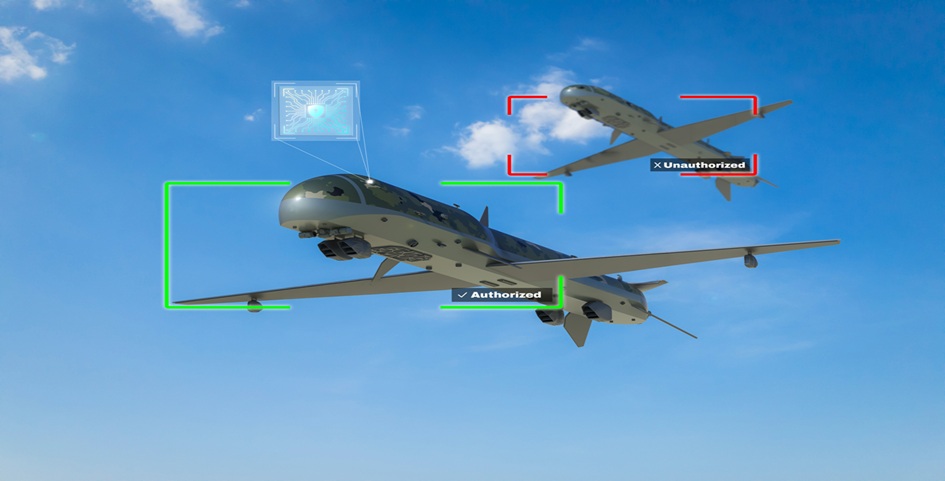
Consider a reconnaissance vehicle equipped with an AI vision model trained to recognise objects in difficult terrain. That model represents valuable intellectual property, developed through years of collecting and labelling data, training algorithms and refining performance.
But what happens if someone gains access to the onboard computer?
They might attempt to extract the model to understand how it works, reverse engineer its capabilities or copy it to run on other hardware. For organisations deploying AI at the edge, protecting the model itself is only part of the challenge. They also need to control which devices are authorised to run it and establish trust in the devices supplying the data on which its decisions depend.
This is where SKYLD and SandGrain bring together two complementary approaches to securing edge AI.
Protecting what the model has learned
Much of the value of a trained AI model lies in its weights: the numerical parameters it develops during training.
Encrypting a model file helps protect it while stored. However, when a conventionally encrypted model is loaded into memory for execution, its original weights may become accessible. This creates an opportunity for extraction, reverse engineering and unauthorised reuse.
SKYLD addresses this challenge by transforming the model parameters so they remain protected both at rest and during execution.
This makes it harder for an attacker with access to the device to recover the original model weights and reverse engineer the intellectual property embedded in the model.
But protecting the model’s contents raises another question: even if someone copies the protected files, what prevents them from running the model on another device?
Controlling where a model can run
AI models are increasingly deployed on distributed edge devices, often operating in remote, exposed or difficult-to-access environments.
Even when a model is protected, its files may still be copied. The critical question is whether those files can be used on unauthorised hardware.
SandGrain’s CyberRock technology establishes a unique, hardware-rooted identity through its Trust Anchor IC. This identity enables devices to authenticate themselves using symmetric cryptography. Unlike authentication approaches that depend on public-key algorithms vulnerable to future quantum computers, CyberRock’s symmetric authentication approach is designed to support long-term cryptographic resilience. This is particularly relevant for defence and industrial equipment expected to remain operational for many years.
In the joint SandGrain × SKYLD approach, device-bound encryption ties the protected AI model to authorised hardware.
The result is a combination of two complementary security mechanisms:
- SKYLD protects the model, helping prevent extraction and reverse engineering, both at rest and during execution.
- SandGrain verifies the device, establishing its hardware-rooted identity and enabling authentication.
- Together, they control where the model can run, binding access to authorised hardware.
Copying the model files to another device does not, by itself, provide the authorisation required to execute the protected model.
This helps organisations retain control over valuable AI capabilities, even when devices are deployed beyond the physical security of their own facilities.
Trusting what the model sees
Protecting the AI model and controlling where it runs are important foundations. But there is another consideration for AI systems operating in the field: can the system trust the devices supplying its data?
An AI model may receive images or other information from multiple cameras, sensors and connected devices. If an unauthorised device can impersonate a legitimate sensor, it may be able to introduce misleading or manipulated inputs into the system.
CyberRock’s hardware-rooted device identity can also support authentication of these connected data sources.
By enabling systems to verify the identity of individual cameras and sensors, organisations can establish a stronger foundation for trusting the origin of information supplied to an AI model.
For example, a reconnaissance platform could authenticate a connected camera before accepting its data, helping distinguish an authorised source from an unauthorised replacement.
Device authentication alone does not guarantee that the data itself is accurate or has not been altered. Protecting data integrity requires additional mechanisms appropriate to the system architecture.
Nevertheless, establishing the authenticity of connected devices is an important step towards securing the wider edge-AI environment. For defence and other mission-critical applications, this extends the security conversation beyond protecting the AI model to protecting the chain of trust surrounding its deployment.
Designed for real-world deployments
Edge-AI security must work within the practical constraints of the equipment it protects.
Defence and industrial platforms may remain in operation for many years, operate without continuous cloud connectivity or require maintenance and replacement of individual components. Introducing additional security should therefore take account of existing hardware architectures, operational requirements and lifecycle considerations.
CyberRock supports retrofit integration into existing Edge AI platforms, providing a practical way to introduce hardware-rooted device identity and authentication without necessarily redesigning the entire platform.
Combined with SKYLD’s model protection, this provides an approach worth evaluating for organisations seeking to protect AI intellectual property and maintain control over its deployment throughout the operational lifecycle.
Questions to ask of your own systems
As AI becomes increasingly embedded in operational equipment, organisations should consider three fundamental questions:
- Can someone copy your AI model and run it on another device?
Protecting the model’s contents is important, but so is controlling which hardware is authorised to execute it.
- Is your AI model protected during execution, not just while stored?
Traditional file encryption may leave model parameters exposed when they are loaded into memory. Protection needs to account for the model’s operational state.
- Can you verify the authenticity of the devices supplying data to your AI model?
Understanding where data originates helps establish trust in the wider system, particularly when multiple connected sensors or cameras contribute to AI-driven decisions.
These questions provide a practical starting point for evaluating the security of an edge-AI deployment.
Protect the model. Verify the device. Bind them together.
SandGrain and SKYLD combine hardware-rooted device identity with AI model protection to help organisations safeguard valuable intellectual property, control where models can run and establish a stronger foundation of trust across connected edge-AI systems.
Explore what this could mean for your platform.
Contact SandGrain and SKYLD to discuss your AI model, hardware architecture and operational requirements, and explore a technical evaluation tailored to your use case.
Share this article


Explore more insights

One compromised device. How big could the consequences be?
Recent attacks on supermarket refrigeration systems reveal a growing business risk: when connected equipment is compromised, the damage can extend far beyond the device itself.

SandGrain appoints Jan Jager as CEO to bring trusted device identity to a connected world
New CEO to accelerate CyberRock adoption through customer collaboration, strategic partnerships and international growth

Being connected doesn’t make a device trustworthy
Recent cybersecurity incidents in the retail sector raise a broader question: how much trust do organisations place in connected systems without knowing whether the devices within them are genuinely trustworthy?