
Agentic AI at the Edge:
Why hardware-rooted trust is becoming essential
As organizations deploy Agentic AI, autonomous models that make decisions and trigger actions with minimal human oversight, the environments in which these agents operate become increasingly important.

Much of today’s AI security discussion focuses on protecting models, training data, APIs and cloud infrastructure. These are all essential. However, when AI moves beyond cloud environments and begins operating in factories, energy systems, medical devices and other forms of critical infrastructure, another question emerges:
Can the hardware running the AI also be trusted?
Most current identity approaches rely on certificates and cloud-centric frameworks. They work well in environments with stable connectivity and abundant computing resources. At the edge, however, devices often operate under different conditions: constrained resources, intermittent connectivity, strict latency requirements and long operational lifecycles.
When AI starts making decisions that affect physical processes, it becomes important not only to trust the software, but also the physical device executing it.
Hardware-rooted identity changes the equation
One way to address this challenge is through hardware-rooted identity.
An immutable hardware Trust Anchor creates a unique cryptographic identity during manufacturing that is physically bound to the device. This identity is protected from the application processor and remains associated with the hardware throughout its operational lifetime.
This allows AI systems to verify the identity and integrity of the device before autonomous workloads are executed, providing confidence that software is running on an authentic and trusted hardware platform.
Hardware-rooted trust enables strong device authentication with minimal operational overhead. It supports secure hardware-bound model deployment and provable device-model binding, while remaining compatible with the industry’s transition toward post-quantum security.
The next question
As more organizations deploy Agentic AI into the physical world, AI security discussions will naturally continue to focus on protecting models, software and data.
Equally important, however, is understanding the platform on which those models operate.
For AI systems interacting with the physical world, hardware becomes part of the security boundary. As a result, system architects should increasingly consider not only how AI models are protected, but also how trust is established in the devices executing them.
About the author
Daniel Mitcan is Chief Technology Officer at SandGrain, where he leads technology strategy, system architecture and product development for hardware-rooted cybersecurity solutions. He brings more than 20 years of experience across semiconductors, high-tech systems, and energy.

Explore more insights
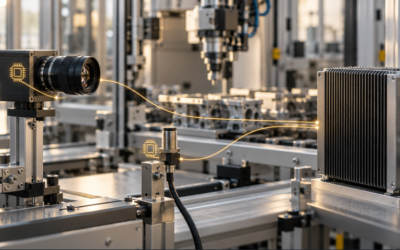
Responsible AI needs a foundation of trust
Can AI trust what it is making decisions on?
Artificial intelligence is moving rapidly from the digital world into the physical one.
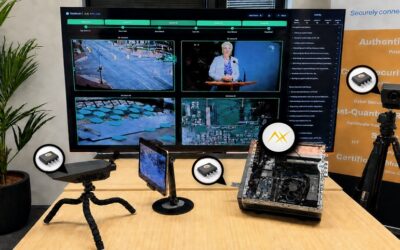
SandGrain and Axelera AI join forces to advance trusted AI at the edge
As artificial intelligence moves increasingly to the edge, trust becomes fundamental. It is no longer enough to know that an AI model can process data quickly and efficiently. Organisations also need confidence in where that data comes from, which devices can be trusted, and that the AI models themselves remain protected.

Leadership transition
As of September 1, 2026, Joeri Voets will step down as CEO and director of SandGrain. This decision follows discussions between the Shareholders, Supervisory Board and Executive Board regarding the company’s next phase of growth and the leadership experience required for that phase.